Diabetes affects over 77 million Indians – making it one of the most pressing public health challenges in the country. And while medication plays a role, nutrition is the most powerful lever you have for controlling blood sugar, reducing HbA1c, and in some cases, achieving remission in Type 2 diabetes.
This guide gives you a practical, India-specific framework for eating well with diabetes.
Understanding Blood Sugar Basics
All carbohydrates break down into glucose. But not all carbohydrates behave equally. The glycaemic index (GI) measures how quickly a food raises blood sugar. High-GI foods (white bread, refined sugar, maida) cause sharp spikes and crashes. Low-GI foods (oats, legumes, millets) release glucose slowly – keeping blood sugar stable and insulin demand lower.
For diabetes management, the goal isn’t to avoid carbohydrates entirely – it’s to choose the right carbohydrates in the right portions, paired with protein and fat to further slow glucose absorption.
Foods to Include
Low-GI Grains:
- Millets (jowar, bajra, ragi) – all significantly lower GI than wheat and rice
- Oats – excellent for breakfast; beta-glucan fibre proven to lower blood sugar
- Brown rice – lower GI than white rice; combine with dal for better glycaemic response
- Whole wheat roti – choose stone-ground atta over refined flour blends
Protein Sources:
- Dal, legumes (rajma, chana, moong) – provide protein, fibre, AND a low glycaemic response
- Curd / buttermilk – probiotic benefit + moderate protein
- Eggs – excellent glycaemic control, high biological value protein
- Fish – particularly recommended; omega-3 fatty acids improve insulin sensitivity
- Chicken and paneer (in moderation)
Vegetables:
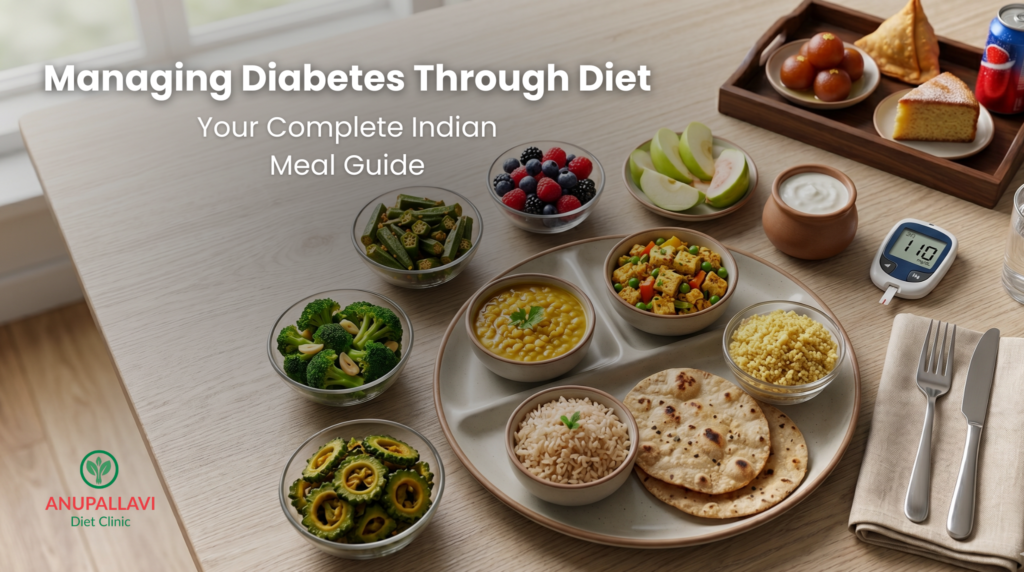
Non-starchy vegetables should fill half your plate at every meal: spinach, methi, bottle gourd, ridge gourd, ash gourd, bitter gourd (karela – proven blood-sugar lowering effect), cabbage, cauliflower, broccoli
- Tomatoes, cucumber, capsicum – excellent raw or cooked
- Limit: potato, sweet potato, corn (all high GI – small portions only)
Fruits for Diabetics:
- Jamun – proven to reduce blood sugar naturally
- Guava – low GI, high fibre, excellent choice
- Apple – eat with the skin for fibre; moderate amounts
- Papaya – low GI, excellent digestive benefits
- Berries, if available
- Limit: mango, banana, grapes, chikoo (all higher in natural sugars)
Spices with Blood Sugar Benefits:
- Fenugreek (methi) seeds soaked overnight – excellent insulin sensitiser
- Cinnamon – shown to improve insulin sensitivity
- Turmeric – anti-inflammatory; reduces insulin resistance
- Bitter gourd / karela juice – traditional remedy with evidence base
Foods to Avoid or Strictly Limit
- Maida-based foods: white bread, biscuits, namkeen, noodles, pizza, cakes
- Refined rice (polished white rice in large portions)
- Sugary drinks: cold drinks, packaged juices, sweetened chai in excess
- Deep-fried snacks: samosas, pakoras, poori, chips
- Sweets and mithai: even “sugar-free” versions often contain high-GI substitutes
- Full-fat dairy in excess: switch to low-fat or skimmed milk
Meal Timing and Portion Control
For diabetics, meal timing is as important as meal content:
- Eat every 3-4 hours – don’t skip meals (prolonged gaps cause blood sugar crashes followed by spikes)
- Never skip breakfast – this sets your glucose baseline for the day
- Keep dinner light and eat it before 8pm
- Avoid late-night carbohydrate-heavy snacking
The plate method works well for portions:
- Half the plate: non-starchy vegetables
- Quarter: protein (dal, egg, fish, paneer)
- Quarter: complex carb (small portion of millet roti, brown rice, oats)
2-Day Sample Diabetic Meal Plan
Day 1:
- Breakfast: Methi paratha (1, whole wheat) + curd (low fat) + cucumber
- Mid-morning: Handful of roasted chana or 1 small guava
- Lunch: Brown rice (small portion) + sambar + stir-fried bitter gourd + curd
- Evening: Chaas + 5 almonds
- Dinner: Jowar roti (1-2) + dal palak + salad
Day 2:
- Breakfast: Oats upma with vegetables + boiled egg
- Mid-morning: 1 apple + a few walnuts
- Lunch: Bajra roti + rajma (small portion) + cucumber raita + sabzi
- Evening: Green tea + 2 marie biscuits (or roasted makhana)
- Dinner: Vegetable soup + moong dal chilla + salad
Important Note
If you are on insulin or diabetes medication, any significant dietary change should be made in consultation with your doctor and dietitian – dietary changes can affect your medication requirements.
The Bottom Line
Diabetes doesn’t mean giving up the foods you love. It means understanding them, portioning them wisely, and building a sustainable eating pattern that keeps your blood sugar in the healthy range – day after day.
With the right nutrition guidance, many people with Type 2 diabetes have significantly reduced their HbA1c and medication dependence within months.
Book a personalised diabetes nutrition consultation with Anupallavi Diet Clinic.