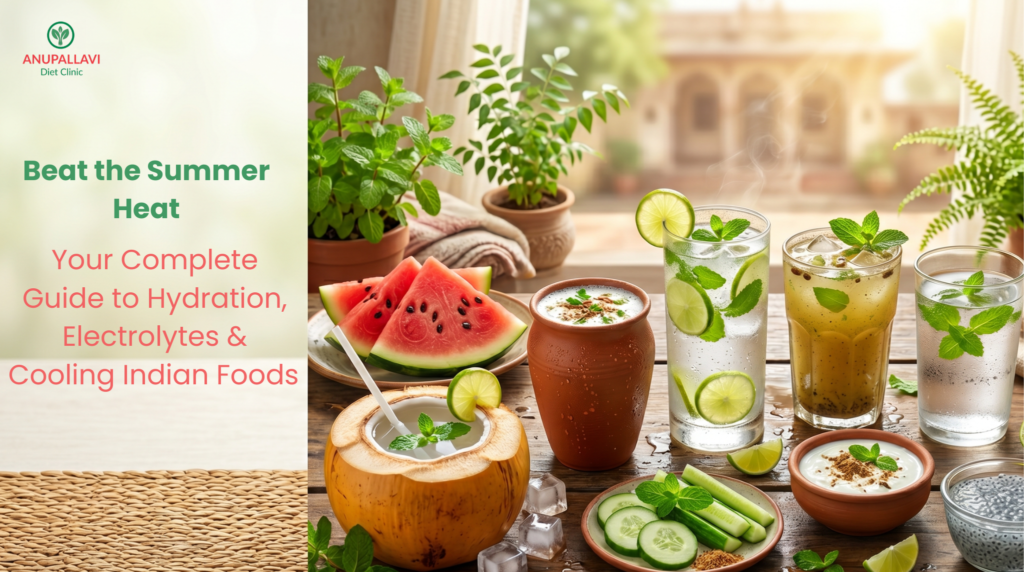
As March arrives and temperatures in South India begin their steady climb, staying hydrated becomes more than just drinking eight glasses of water a day. True summer hydration is about balance – water, electrolytes, timing, and the right foods working together to keep your body cool and energised.
Why Hydration Is More Than Just Water
When you sweat, you don’t just lose water – you lose electrolytes: sodium, potassium, magnesium, and chloride. Replacing only water without these minerals can actually dilute your blood sodium levels, a condition called hyponatremia, which causes fatigue, headaches, and in severe cases, confusion.
This is why plain water, while essential, isn’t always enough during intense summer heat. Your body needs electrolyte balance.
Signs You’re Dehydrated
Watch for: dark yellow urine, dry mouth, fatigue that hits even after rest, dizziness when you stand up, and reduced urination. Even 2% dehydration can impair concentration and physical performance. Don’t wait until you’re thirsty – thirst is already a sign you’re mildly dehydrated.
How Much Water Do You Actually Need?
The “8 glasses a day” rule is a starting point, not a finish line. A more accurate approach: drink 35 ml per kg of body weight daily in moderate temperatures. In summer or if you’re physically active, increase that to 40–45 ml/kg. A 60 kg person should be drinking roughly 2.1–2.7 litres a day.
India’s Best Cooling Drinks – Nature’s Own Electrolytes
Long before commercial sports drinks existed, Indian kitchens had the answers:
Coconut Water – Nature’s isotonic drink. Rich in potassium, magnesium, and natural sugars, it replenishes electrolytes without artificial additives. Best consumed fresh in the morning or post-exercise.
Chaas / Buttermilk – A probiotic powerhouse that cools the digestive tract. Add a pinch of rock salt, cumin, and mint to boost its electrolyte content. An ideal post-lunch summer drink.
Neer Mor (South Indian spiced buttermilk) – A lighter version of chaas, this is particularly popular in Karnataka, Tamil Nadu, and Kerala. Diluted, salted, and flavoured with ginger and curry leaves, it’s incredibly hydrating.
Sattu Sherbet – Common in North India, sattu (roasted Bengal gram flour) mixed with water, lemon, and a pinch of salt is a protein and mineral-rich summer cooler that keeps you full and hydrated together.
Aam Panna (Raw Mango Drink) – Rich in Vitamin C and electrolytes, raw mango is a traditional heat-stroke preventive. It contains a natural mix of iron and sodium that helps retain fluids during intense heat.
Sabja (Basil Seed) Water – Soaked sabja seeds swell up and create a cooling gel. They’re excellent for regulating body temperature and soothing the digestive system. Add them to nimbu pani or rose sherbet.
Water-Rich Foods That Hydrate You From Within
Don’t just drink your hydration – eat it. These foods are above 90% water by weight:
- Cucumber (96% water) – Slice into salads or blend into raita
- Watermelon (92% water) – A summer staple rich in lycopene and citrulline
- Tomatoes (94% water) – Excellent raw in salads
- Bottle gourd / Lauki (96% water) – Light on the stomach, perfect for summer sabzis
- Curd / Dahi – Cooling, probiotic, and an excellent afternoon snack
DIY Summer Cooler Recipe: Sabja Coconut Lemonade
Here’s a simple drink to make at home:
- 1 glass fresh coconut water
- Juice of half a lemon
- 1 tsp soaked sabja seeds
- A pinch of black salt
- 3–4 fresh mint leaves
Mix, serve chilled (not ice-cold – extreme cold can cause digestive upset in heat). This drink hydrates, cools the body, and replenishes electrolytes naturally.
What to Avoid
Limit: alcohol (dehydrating), excessive caffeine (mild diuretic), heavily fried and spicy foods (increase internal body heat), and sugary cold drinks (spike blood sugar and cause energy crashes).
Ice-cold water might feel refreshing, but it can cause digestive cramping. Aim for cool, not freezing.
A Final Word
This summer, think of hydration as a full-day practice – not just something you do when you’re thirsty. Start your morning with a glass of water, include cooling foods at every meal, sip on traditional Indian coolers through the day, and listen to what your body is telling you.
Your body works hard to keep you cool. Help it along.
Have questions about your summer diet plan? Book a consultation with Anupallavi Diet Clinic today.