
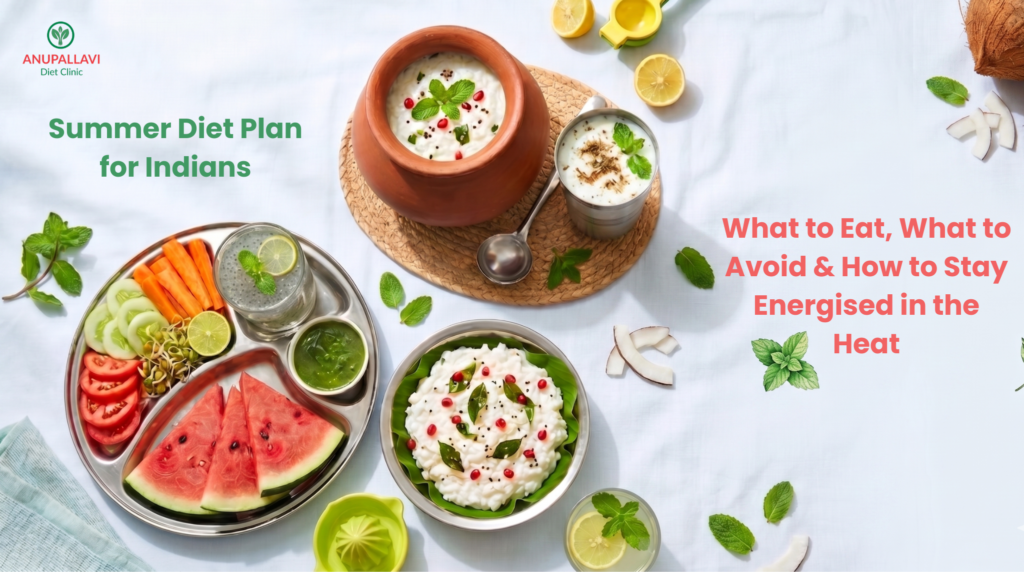
Summer in India is beautiful – mangoes, watermelons, long evenings – but it’s also demanding on the body. Rising temperatures increase fluid loss, slow digestion, reduce appetite, and can leave you feeling sluggish and drained by midday. The solution isn’t to eat less – it’s to eat smarter.
Here’s your complete guide to eating well through the Indian summer.
Why Summer Changes What Your Body Needs
In heat, your body diverts more blood to the skin to regulate temperature. This means less blood flow to the digestive system, making digestion slower and heavier meals harder to process. Your metabolism also naturally adapts – your appetite may reduce, but your need for micronutrients and hydration increases.
Eating heavy, oily, or protein – dense meals forces your body to work harder during digestion – generating more internal heat. The goal in summer is to eat light, cooling, and nutrient – dense.
What to Eat in Summer
Seasonal Fruits – Nature’s Summer Pharmacy
Indian summer fruits are perfectly designed for the season:
Watermelon – 92% water, rich in lycopene (a powerful antioxidant) and citrulline (supports circulation). A perfect afternoon snack.
Mango – In moderation, raw and ripe mangoes are rich in Vitamin C, A, and electrolytes. Raw mango (as aam panna) prevents heat stroke. Ripe mango provides natural energy – limit to 1 cup/day for weight – watchers.
Litchi – High in Vitamin C and polyphenols. Eat in the morning rather than at night.
Jamun (Indian Blackberry) – Excellent for diabetics. Lowers blood sugar naturally and improves insulin sensitivity. A summer gift for those managing diabetes.
Bael (Wood Apple) – Traditional heat – reducing fruit. Bael sherbet is a classic remedy for sunstroke and gut issues.
Cooling Vegetables to Include Daily
Cucumber, bottle gourd (lauki), ridge gourd (turai), ash gourd all high in water content, easy to digest, and cooling for the gut
Mint and coriander Use liberally in chutneys, raitas, and coolers. Both are natural body – temperature regulators.
Drumstick (Moringa) A summer powerhouse. Rich in iron, calcium, and Vitamin C. Excellent in sambar and dal.
Curd / Dahi – Your Summer Best Friend
Curd is one of the most complete summer foods. It cools the digestive tract, replenishes probiotics, provides easily digestible protein, and pairs with almost everything. A bowl of curd rice, a glass of chaas, or a simple raita at lunch can be transformative for summer digestion.
Light Grains Over Heavy Ones
Swap heavy wheat rotis for lighter options in peak summer:
Jowar (Sorghum) and Bajra rotis – cooling, high in fibre
Rice easier to digest than wheat in heat. South Indian meals of rice, sambar, and curd are a naturally summer – appropriate combination.
Poha and Upma light breakfasts that don’t burden the digestive system
What to Avoid (Or Limit)
Deep – fried foods Pakoras, puris, and samosas increase internal body heat and slow digestion in an already sluggish summer system
Excessive red meat Red meat has a high thermic effect (your body generates more heat digesting it). Limit in peak summer.
Very spicy curries Spice increases sweating and body heat. Reduce chilli, go heavier on cooling spices like coriander, fennel, and cumin.
Packaged juices and cold drinks High sugar causes blood sugar spikes and crashes, leaving you more fatigued in the heat.
Alcohol Dehydrating and liver – taxing in high temperatures.
3 – Day Sample Summer Meal Plan
Day 1
- Breakfast: Poha with peanuts + 1 glass coconut water
- Mid – morning: Watermelon (1 cup) + 5 soaked almonds
- Lunch: Rice + sambar + cucumber raita + lauki sabzi
- Evening: Chaas + 1 small fruit
- Dinner: Jowar roti + moong dal + stir – fried turai
Day 2
- Breakfast: Oats porridge (made with thin curd) + 1 banana
- Mid – morning: Bael sherbet or nimbu pani (no sugar, honey if needed)
- Lunch: Brown rice + dal + bottle gourd curry + curd
- Evening: Sattu sherbet + handful of roasted chana
- Dinner: Vegetable khichdi + side salad
Day 3
- Breakfast: Idli (2 – 3) + sambar + coconut chutney
- Mid – morning: 1 cup fresh mango (ripe) or a raw mango cooler
- Lunch: Roti + palak dal + cucumber – tomato salad + curd rice
- Evening: Sabja lemonade + fruit chaat
- Dinner: Mixed vegetable soup + jowar roti
Special Notes for Different Health Conditions
Diabetics: Stick to low – glycaemic summer fruits (jamun, guava, papaya). Avoid mango in excess. Hydrate with chaas and neer mor – avoid sugary coolers.
PCOS: Include anti – inflammatory summer foods: cucumber, mint, coriander, coconut water. Avoid sugary drinks and fried snacks which worsen hormonal imbalance.
Weight Management: The summer is actually a great time to lose weight naturally – appetite reduces, lighter foods are more satisfying. Don’t compensate with cold drinks or ice creams. Stick to the plan.
The Bottom Line
Summer is not the enemy of a healthy diet – it’s actually an invitation to eat more naturally, more seasonally, and more intuitively. Indian cuisine has centuries of summer wisdom built in – chaas, aam panna, curd rice, sabja – it’s all there. You just need to use it.
Eat light, stay hydrated, embrace the season’s produce, and your body will thank you.
Ready to get a personalised summer meal plan? Book your consultation with Anupallavi Diet Clinic.